
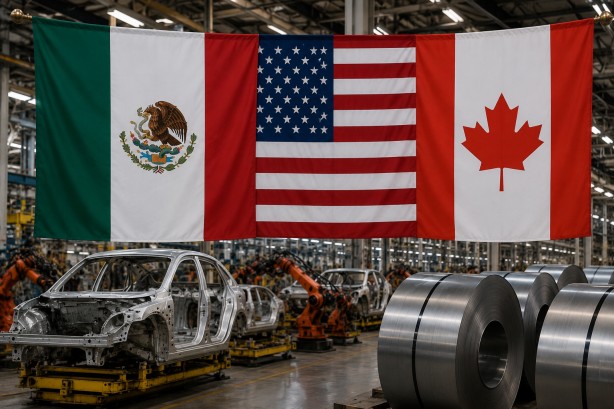
In the forthcoming evaluation of the US-Mexico-Canada Agreement (USMCA), Mexico is set to advocate for the elimination of tariffs on steel and automobiles imposed by the United States. This move is part of a broader strategy by the Mexican government to seek enhanced investment protections, bolster economic security measures, and implement rules to curb unilateral trade actions. These steps reflect Mexico’s commitment to fostering stable trade relations within North America.
Mexican President Claudia Sheinbaum has voiced optimism about the long-term renewal of the trade agreement, despite the U.S.’s decision to carry out annual reviews up until 2036. Sheinbaum’s confidence underscores Mexico’s strategic focus on maintaining robust economic ties and ensuring the longevity of the USMCA for another 16 years. This reflects Mexico’s broader objective of strengthening economic integration across the North American region.
Throughout the ongoing discussions, Mexico has consistently addressed a range of trade concerns with Washington. The core of these discussions revolves around the importance of sustaining balanced trade relations, which are vital for economic stability and growth. By addressing these issues, Mexico aims to alleviate uncertainties that have been exacerbated by tariff disputes and the regular reviews mandated by the current trade framework.
The USMCA remains a critical trade agreement for the region, yet the persistent issues of tariffs and the requirement for annual assessments have introduced a degree of unpredictability for businesses and investors. This uncertainty poses challenges for companies seeking long-term planning and investment in North America. Mexico’s proactive approach in addressing these concerns highlights the nation’s commitment to ensuring a stable commercial environment across the continent.