
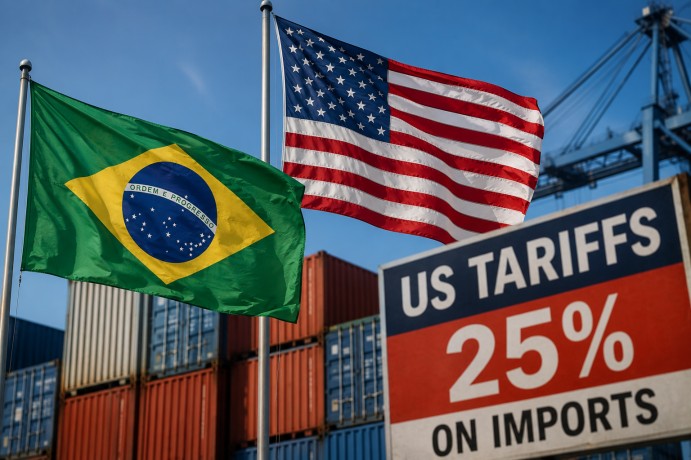
Brazil has expressed strong disapproval of the recent decision by the United States to impose a 25% tariff on certain Brazilian goods starting July 22. The Brazilian government has labeled the move as unjustified and firmly denied any engagement in unfair trade practices, countering the allegations put forth by Washington.
The tariffs, which will target selected Brazilian imports, have stirred controversy. However, to prevent disruptions in the supply chain, several key products such as coffee, beef, oranges, orange juice, certain oil and gas products, and aerospace components have been excluded from the tariff list. Despite the exemptions, the Brazilian administration remains opposed to the trade measures.
According to the US Trade Representative, the decision to impose tariffs came after an investigation revealed that Brazil engages in several unfair trade practices. These include inadequate enforcement of anti-corruption measures and the maintenance of trade policies deemed unreasonable by US standards. American officials argue that the tariffs are designed to ensure a level playing field for US businesses and workers, although they also indicated that discussions with Brazil are ongoing.
US Secretary of State Marco Rubio criticized President Luiz Inácio Lula da Silva’s government, accusing it of not negotiating in good faith. Rubio claimed that Brazil’s economic policies have been detrimental to both American and Brazilian interests, further complicating the trade relations between the two nations.
In response, Brazil has stood firm in rejecting these accusations, continuing to voice opposition to the tariff measures. The ongoing tension highlights the complexities of international trade relations and the challenges in balancing domestic economic policies with global partnerships.