
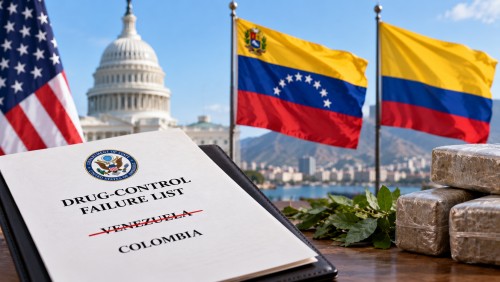
In a move reflecting ongoing efforts to combat drug trafficking in Latin America, the United States has revised its list of countries that have not met international counternarcotics commitments. Recently, the U.S. government announced the removal of Venezuela from this list, citing progress in the country’s efforts under interim President Delcy Rodríguez. This decision marks a significant shift in U.S. policy towards Venezuela, which had been previously criticized for failing to meet such obligations.
According to the Trump administration, Venezuela’s advancements against drug-trafficking organizations justified its removal from the list. In contrast, Colombia, another major player in the regional drug trade, remains on the list. The White House identified Colombia as one of four countries that have not made substantial progress in the past year toward fulfilling international counternarcotics standards.
President Donald Trump suggested that Colombia’s designation could be reconsidered if the country shows further progress in tackling issues like coca cultivation and cocaine production. Colombian officials have expressed a commitment to addressing the entire drug-trafficking chain, which includes illicit crop eradication, dismantling production facilities, disrupting trafficking routes, and targeting criminal financial networks.
The U.S. decision underscores Washington’s ongoing focus on fostering counternarcotics cooperation across Latin America, an area responsible for significant drug transit and production. Both Venezuela and Colombia continue to be identified by the U.S. as major drug-transit or illicit drug-producing countries for the fiscal year 2027, although Venezuela’s recent efforts have led to a more favorable assessment by the U.S. government.