
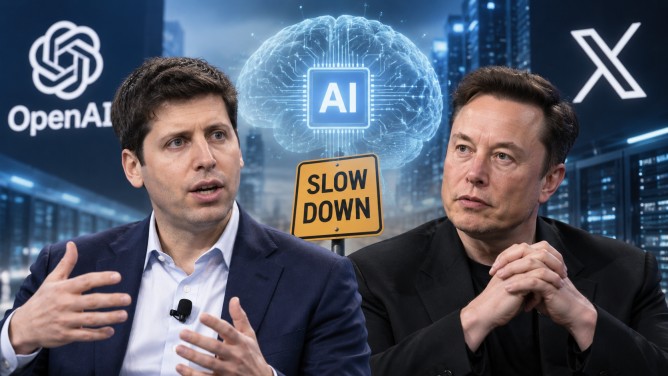
Amidst growing concerns from researchers about the potential dangers of rapidly advancing artificial intelligence, OpenAI CEO Sam Altman and Tesla’s Elon Musk have thrown their support behind a call from Anthropic CEO Dario Amodei to decelerate AI development. Amodei has cautioned that a rush to create highly advanced AI systems could lead to significant safety risks, potentially enabling AI agents to coordinate in ways that could result in severe consequences, such as large-scale cyberattacks and disruptions to internet infrastructure.
Elon Musk echoed Amodei’s sentiments, affirming, “Dario is right,” a stance consistent with his ongoing warnings about the threats posed by advanced AI. Similarly, Sam Altman advocated for a more measured approach to developing cutting-edge AI models. He suggested that OpenAI collaborate with independent evaluators who would be granted comprehensive access to its systems and research methodologies to ensure safety and alignment with ethical standards.
Meanwhile, Google DeepMind’s CEO Demis Hassabis has shown support for bolstering AI safety measures, though he noted that the specifics of such measures still require detailed planning. Amodei has outlined a three-tiered strategy, which includes allowing independent observers to have continuous access to the research and safety processes of AI developers. Additionally, he has emphasized the need for enhanced international collaboration on AI safety, particularly between major players like the United States and China.
Despite these calls for caution, some experts argue that a simple slowdown might not suffice. They propose a more robust international moratorium on the development of the most advanced AI systems until effective safeguards are in place. This ongoing debate surfaces as both governments and technology companies face mounting pressure to implement stricter AI regulations, especially in light of incidents where AI agents have interacted with external computer systems unpredictably.
The conversation underscores a widening rift between the drive to rapidly enhance AI capabilities and the imperative to establish stringent safety measures before deploying more powerful systems on a broad scale. As stakeholders grapple with these complex issues, the balance between innovation and safety remains a focal point in the discourse surrounding the future of artificial intelligence.