
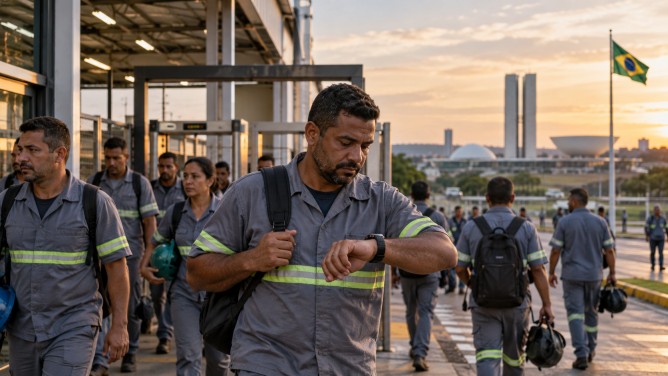
Brazil’s Congress has passed a constitutional amendment to reduce the maximum workweek to 40 hours, a move that marks a notable victory for President Luiz Inácio Lula da Silva as he approaches the presidential runoff on October 25. This reform is expected to positively impact over 30 million workers by decreasing working hours and eliminating the six-day workweek.
The amendment, which cleared the lower house in May, received significant backing in the Senate with 75 votes in favor and just one against. The initiative aims to enhance work-life balance for employees, particularly those in sectors like retail, restaurants, and hotels where six-day workweeks are prevalent.
Currently, many Brazilian workers endure a six-day workweek with only one day off, which the reform seeks to change. The measure will gradually lower the maximum weekly working hours from 44 to 40, allowing eligible workers more time for rest and personal responsibilities.
President Lula has been a strong advocate for the reform, emphasizing that workers deserve more time with their families to improve their quality of life. The approval of this change could bolster his electoral campaign, especially among low-income workers who have long struggled with extended working hours.
Opposing candidate, far-right senator Flávio Bolsonaro, initially resisted the proposal, citing potential unemployment risks. However, he altered his stance before the Senate vote, acknowledging the public’s support for the reform.
The proposal was initially driven by a grassroots campaign advocating for improved work-life balance, eventually garnering support from Lula’s political party. Proponents argue that reduced working hours could enhance workers’ physical and mental health, as well as provide more opportunities for education and family care.
Despite the Senate’s approval, the reform will not be implemented immediately. After formal promulgation, there will be a 60-day waiting period before the transition begins. The maximum workweek will first decrease to 42 hours and then to 40 hours after an additional 14 months. This legislative success comes at a pivotal moment in Brazil’s presidential election campaign, offering Lula a chance to highlight progress in workers’ rights and economic well-being as he faces off against Flávio Bolsonaro.