

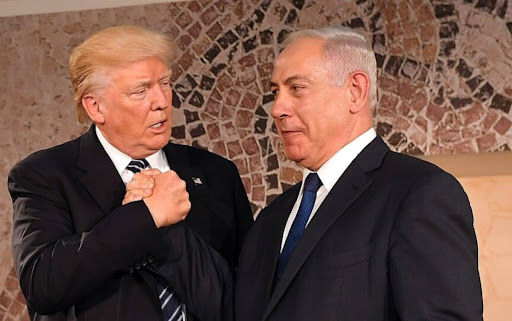
Israeli Prime Minister Benjamin Netanyahu has agreed to hold off on further attacks on Iran’s South Pars gas field following a public and pointed objection from US President Donald Trump. “I told him, ‘Don’t do that,'” Trump said during a White House meeting with Japan’s Prime Minister, in what was widely seen as an unusual break from the tradition of quiet diplomacy between the two close allies. Netanyahu confirmed the agreement while defending the initial strike as a legitimate act of Israeli sovereign decision-making.
The South Pars facility is Iran’s most important energy asset, and its targeting by Israeli forces set off a chain of events with broad regional consequences. Iran retaliated with strikes against energy infrastructure across the Middle East, driving prices higher and alarming Gulf nations that depend on a stable energy environment. Those nations wasted no time in turning to Washington, calling on Trump to assert more influence over Israeli military decisions.
Netanyahu’s public response was measured. He acknowledged acting alone while also agreeing not to repeat the move, a combination designed to demonstrate both independence and responsiveness to American concerns. He framed the larger relationship as one of deep shared purpose, citing Trump’s long-standing concern about Iran as proof of their alignment. “He’s the leader. I’m his ally,” Netanyahu said — language that appeared calibrated to flatter Washington while preserving Israeli discretion.
The credibility of the US response came under scrutiny when reporting emerged that Washington had prior knowledge of the strike despite Trump’s claim to the contrary. US officials later sought to clarify the situation by emphasizing ongoing target coordination and the independence of American strategic decision-making. Senior officials acknowledged that the US has its own set of military objectives — centered on Iran’s nuclear program, missiles, and naval assets — that do not necessarily match Israel’s.
The fundamental question hanging over the alliance remains one of goals. Trump wants nuclear containment. Netanyahu wants regional transformation. Intelligence chief Tulsi Gabbard said the two leaders’ objectives diverge — an acknowledgment rare in its directness. Trump has also distanced himself from talk of an Iranian uprising, questioning whether it is a realistic outcome. The war, for now, goes on — but not exactly as one.
