
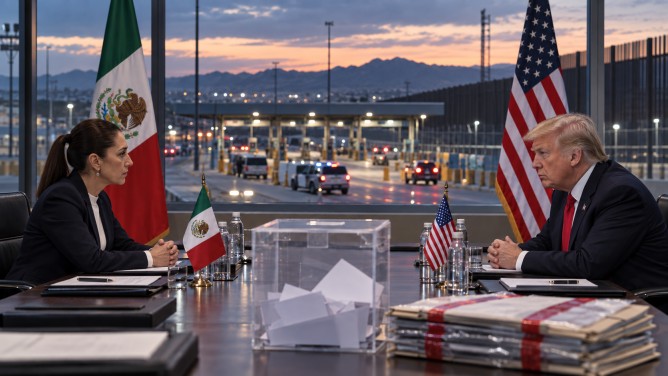
As elections loom in both Mexico and the United States, diplomatic tensions are mounting over issues of drug trafficking and corruption. The Trump administration has intensified its pressure on Mexico, accusing it of insufficient efforts to combat the flow of illegal drugs and prosecute officials with alleged ties to criminal organizations. This friction has become a significant talking point in the political discourse leading up to the U.S. midterm elections scheduled for November.
Meanwhile, Mexican President Claudia Sheinbaum has firmly rejected what she perceives as external interference from the U.S., asserting that her administration is actively addressing organized crime and corruption while safeguarding Mexico’s sovereignty. Sheinbaum’s government has urged the United States to enhance its measures against drug distribution, money laundering, and the illegal trafficking of firearms into Mexico.
The situation has escalated following U.S. legal actions against certain Mexican officials accused of connections to organized crime, as well as the revocation of visas for several Mexican politicians. President Sheinbaum has openly questioned whether some of these actions by Washington are politically motivated.
In response to these developments, Sheinbaum’s administration has taken definitive steps to counteract criminal networks. This includes urging the ruling party, Morena, to implement more rigorous background checks and financial disclosure requirements for political candidates. These measures are part of a broader effort to reinforce political integrity as Mexico approaches its 2027 elections.
Within Mexico, the growing strain with the U.S. has also influenced the political landscape. Opposition parties are leveraging allegations of “narco-politics” and purported connections between organized crime and the ruling party as a strategic challenge to Morena, intensifying the national debate over governance and security.