

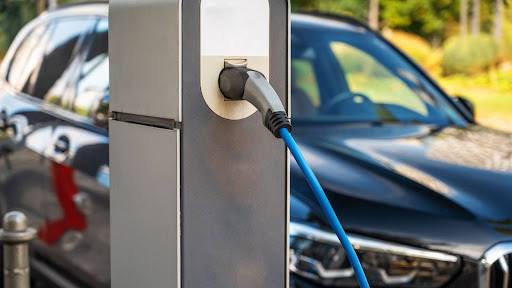
Few Americans could have predicted that events in the Persian Gulf would change how they think about their next car purchase. Yet the closure of the Strait of Hormuz — ordered by Iran in response to US and Israeli military operations — has pushed gasoline to $3.90 a gallon nationally, and that jump is generating a fresh wave of consumer interest in electric vehicles. Online searches for EV models have risen 20 percent over the past three weeks, according to automotive research platform CarEdge.
The Strait of Hormuz is not a well-known geographic feature to most American consumers, but its importance to global energy markets is enormous. Roughly one in five barrels of oil traded globally passes through this narrow passage, and its disruption sends immediate price signals across commodity markets worldwide. Iran’s decision to close it following the military strikes has been one of the primary drivers of the current fuel price surge.
Justin Fischer at CarEdge said the data showed an almost instantaneous consumer reaction to the conflict news, with search interest in EVs jumping sharply within 48 hours of the strikes. He framed the current EV interest surge as a direct response to energy price anxiety, and noted that prolonged high prices could significantly amplify the effect. Edmunds also registered an increase in EV research, with head of insights Jessica Caldwell pointing out that fuel cost is one of the most emotionally resonant aspects of car ownership.
Among the groups most interested in making the switch, buyers in lower income brackets stand out. For these consumers, used electric vehicles are increasingly within reach. Pre-owned models from Tesla, Nissan, and Chevrolet are now priced under $25,000 in many cases, offering meaningful long-term fuel savings relative to their gasoline counterparts. Caldwell described the current used EV landscape as having reached a tipping point of genuine affordability.
Still, challenges to broader EV adoption in the US are real. The elimination of federal EV incentives under the current administration, combined with automaker retrenchment on EV programs and sparse charging infrastructure in many regions, means that barriers remain high for many potential buyers. While the global market continues to electrify at speed — with EVs accounting for one in five new car sales worldwide — the US trajectory remains far more uneven.
