
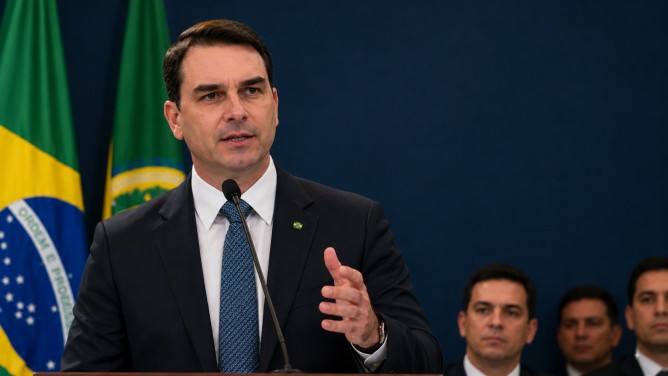
In the race for Brazil’s presidency, Senator Flavio Bolsonaro has stepped into the spotlight, officially launching his campaign for the upcoming October elections. The Liberal Party has chosen him as their candidate, following an endorsement from his father, former President Jair Bolsonaro, positioning Flavio as his political successor. His campaign pledges focus on addressing key national issues such as crime, inflation, and high taxes, aiming to present himself as a viable alternative to the current President, Luiz Inácio Lula da Silva, who is seeking re-election.
Despite his ambitions, Flavio Bolsonaro’s campaign is navigating through a series of challenges. Notably, he is dealing with controversies that have surfaced, including scrutiny over his connections to a businessman currently under investigation. Additionally, a public dispute within his family involving former First Lady Michelle Bolsonaro has captured attention, alongside criticism related to the impact of new U.S. tariffs on Brazil. These issues contribute to an uncertain political landscape as recent opinion polls show President Lula holding a slight edge in what could lead to a runoff election.
The political climate in Brazil is marked by deepening polarization, further complicating the electoral scene. Economic concerns are front and center, with trade tensions between Brazil and the United States becoming a significant topic of discussion. These tensions are influencing the campaign narratives, as candidates navigate these complex issues to appeal to voters.
As Flavio Bolsonaro attempts to consolidate support, he is calling for unity among conservative voters. His appeal for cohesion among his base is crucial as he seeks to fortify his position in the lead-up to the October election. It remains to be seen how these dynamics will play out at the ballot box, as each candidate maneuvers through the intertwined challenges of political rivalry and economic uncertainty.