
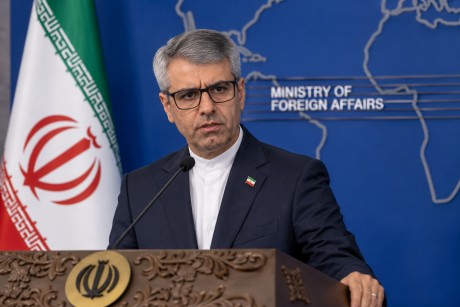
Iran has firmly refuted any claims of its involvement in the ongoing conflict in Yemen, asserting that the Houthi forces are autonomous and make their own strategic choices. Esmaeil Baghaei, the spokesperson for the Iranian Foreign Ministry, emphasized that Tehran does not meddle in Yemeni affairs, rejecting any allegations that tie Iran to recent developments affecting Saudi Arabia and Yemen. He pointed out that the roots of the conflict are deeply embedded within Yemen itself.
The Iranian spokesperson also revealed that a scheduled meeting in Oman, which was to include Iran and several Gulf nations, had been delayed at the behest of Saudi Arabia. This gathering was anticipated to focus on regional security and foster cooperation among the participating countries. Despite the delay, Baghaei assured that Iran and Oman had reached a mutual understanding regarding maritime navigation in the strategic Strait of Hormuz, and both nations are contemplating the next steps.
Oman’s Foreign Minister, Badr Albusaidi, commented on the postponement of the regional meeting, explaining that it was deferred to facilitate a broader consensus among the involved parties. He reaffirmed Oman’s dedication to promoting dialogue, ensuring regional stability, and fostering long-term partnerships.
The talks in Oman were expected to offer a platform for addressing various regional concerns, with a particular focus on enhancing cooperation and understanding between the Gulf countries and Iran. Despite the current delay, the commitment to discussing significant issues like maritime security remains a priority for the involved nations, highlighting the importance of collaboration and dialogue in resolving regional tensions.