
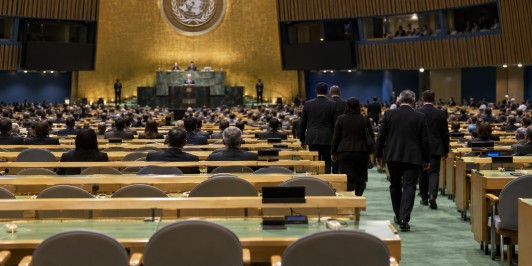
As global tensions simmer, the United Nations General Assembly becomes a focal point for international diplomacy, highlighting the intricate relations between the United States and countries such as Iran and Cuba. During the assembly on September 22, 2020, U.S. President Donald Trump’s address prompted walkouts from the Iranian and Cuban delegations, underscoring the strained relations.
The Iranian delegation exited when President Trump criticized Iran, particularly focusing on U.S. military actions and the potential for further measures should diplomatic efforts falter. Although Iranian President Masoud Pezeshkian and Foreign Minister Abbas Araghchi were in New York for the assembly, they were not present during the speech, leaving other representatives to make the symbolic departure.
President Trump emphasized a stark choice for the United States: reaching an agreement with Iran or escalating actions against it. He urged the international community to bolster economic pressure on Tehran, reflecting ongoing tensions over Iran’s nuclear ambitions and regional influence.
Later, the Cuban delegation followed suit, leaving the chamber after President Trump labeled Cuba a “failed state” and called for significant changes on the island nation. He asserted that the U.S. would not permit foreign adversaries to gain a foothold in Cuba, framing the issue as one of regional security and freedom.
These walkouts marked key moments in a speech that outlined the Trump administration’s stance on various global issues. As world leaders gathered in New York, the event underscored the complex dynamics at play in U.S. foreign policy, particularly towards nations with which it has historically contentious relationships.